New IFR Position Paper: The Impact of Robots
Effects of Automation on Employment, Productivity and Competitiveness
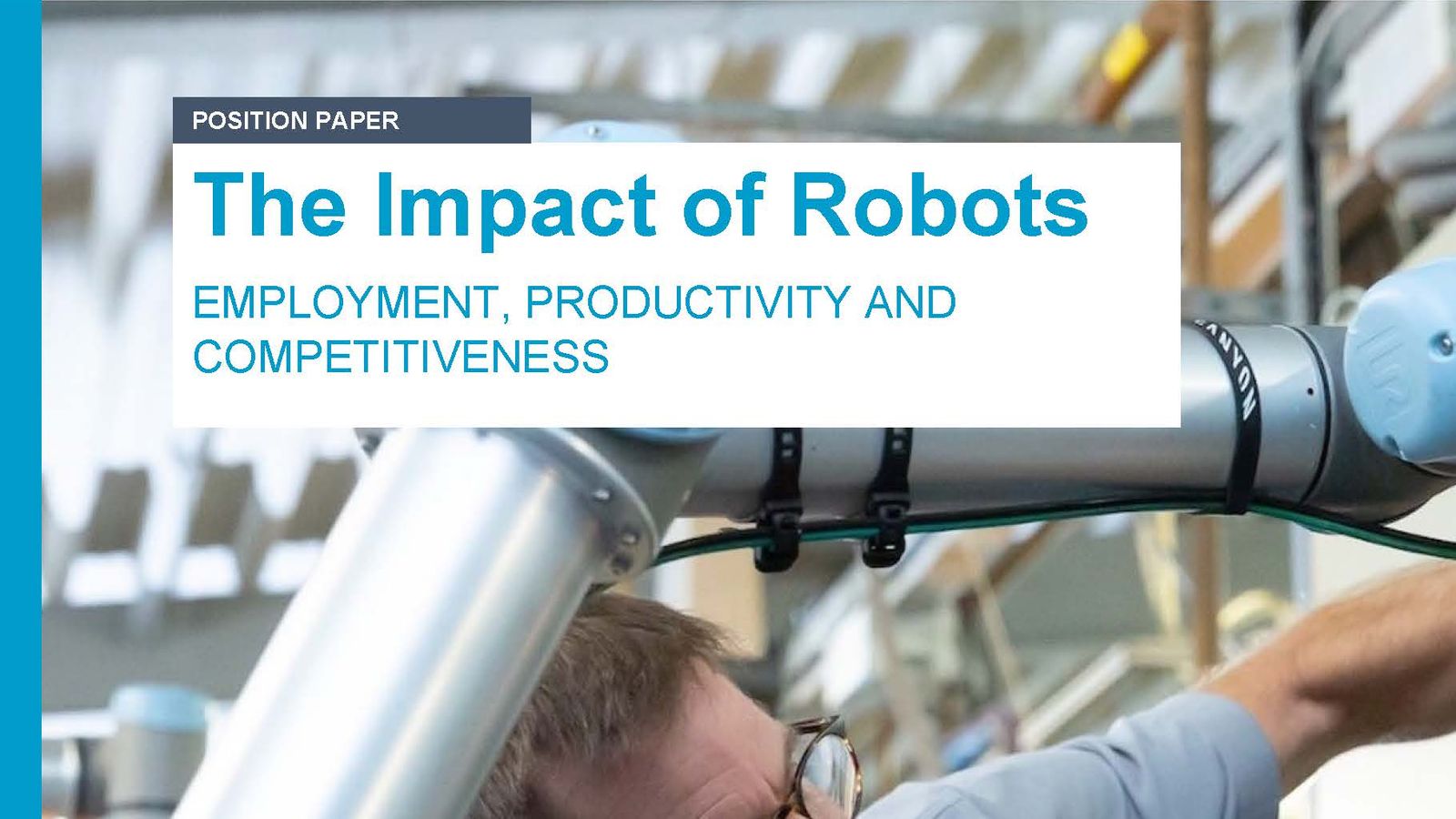
Aug 11, 2026 — The International Federation of Robotics (IFR) has published its new position paper, The Impact of Robots: Employment, Productivity and Competitiveness. The paper reviews current research and evidence on how robot adoption affects labor markets, business performance and economic growth. It replaces the previous IFR position paper The Impact of Robots on Employment and Jobs.
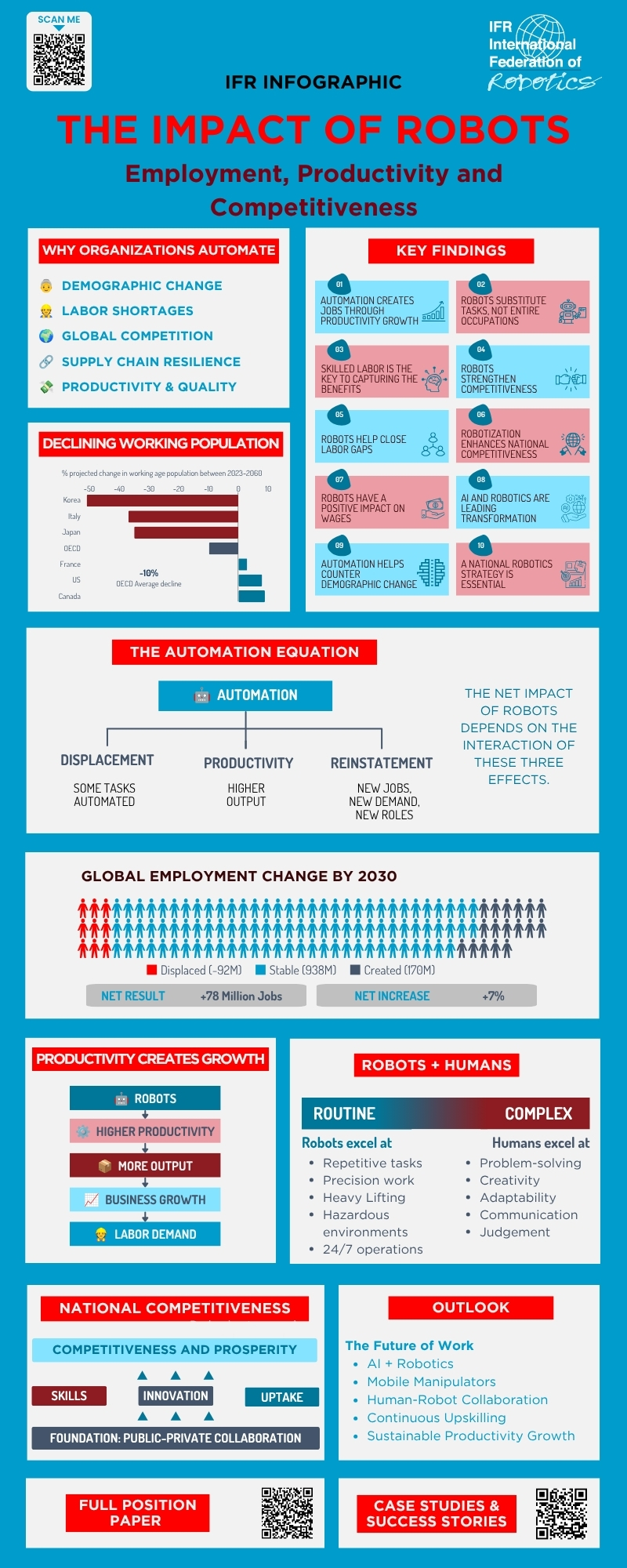
The debate about automation is often dominated by concerns about job displacement. The IFR paper shows that the impact of robotics on employment is more complex and should be understood through the interaction of displacement, productivity and reinstatement effects. While robots automate specific tasks, they also increase productivity, create new tasks and occupations, and help companies expand output and remain competitive.
The evidence shows that robots are not simply replacing workers. Robotics enables companies to become more productive and competitive while helping to address labor shortages and demographic challenges. The key is ensuring that workers have access to the right skills and training.
Key findings
The position paper highlights ten key findings on the impact of robots. These include:
- Automation can support employment growth by increasing productivity and stimulating demand.
- Robots typically substitute tasks rather than entire occupations.
- Robotics improves working conditions by taking over dirty, dull, dangerous and delicate tasks.
- Skills development, reskilling and upskilling are essential to capture the benefits of automation.
- Robot adoption strengthens the competitiveness of companies and contributes to national economic performance.
- Robotics helps address labor shortages and mitigate the impact of demographic change in aging economies.
The paper also examines the growing role of AI-enabled robotics and their contribution to future productivity growth and workforce transformation.
Competitiveness and demographic change
According to the paper, demographic change is becoming a major driver of automation. Aging populations and shrinking workforces are creating labor shortages across key industries, including manufacturing and logistics. Robotics helps companies maintain production capacity and sustain growth despite a declining supply of labor.
The paper further finds that countries with high levels of robot adoption are strengthening their competitiveness through increased productivity, improved export performance and greater resilience of industrial production. National robotics strategies can play an important role in aligning industrial policy, innovation and workforce development to support long-term economic growth.
A call for national robotics strategies
The IFR position paper concludes that a comprehensive national robotics strategy is essential to maximize the benefits of automation. Such strategies should align industrial policy, education, skills development and innovation support to strengthen competitiveness and prepare workforces for a more automated future.
Read the full paper and Key Messages
The IFR position paper The Impact of Robots: Employment, Productivity and Competitiveness is available for download. For IFR members, a compilation of key messages with lines of argumentation on the topic are added.
IFR members interested in receiving the key messages are invited to contact the IFR Secretariat.
Download this and all other IFR Position Paper for free*.
*requires registration