


Breakthrough Robotic Grinding in Energy Storage Manufacturing
Estun helps global customers realize efficient and green production
Sep 02, 2026 — The growing use of renewable energy and the rapid development of electric vehicles have significantly increased demand for energy storage systems such as lithium batteries and energy storage cabinets.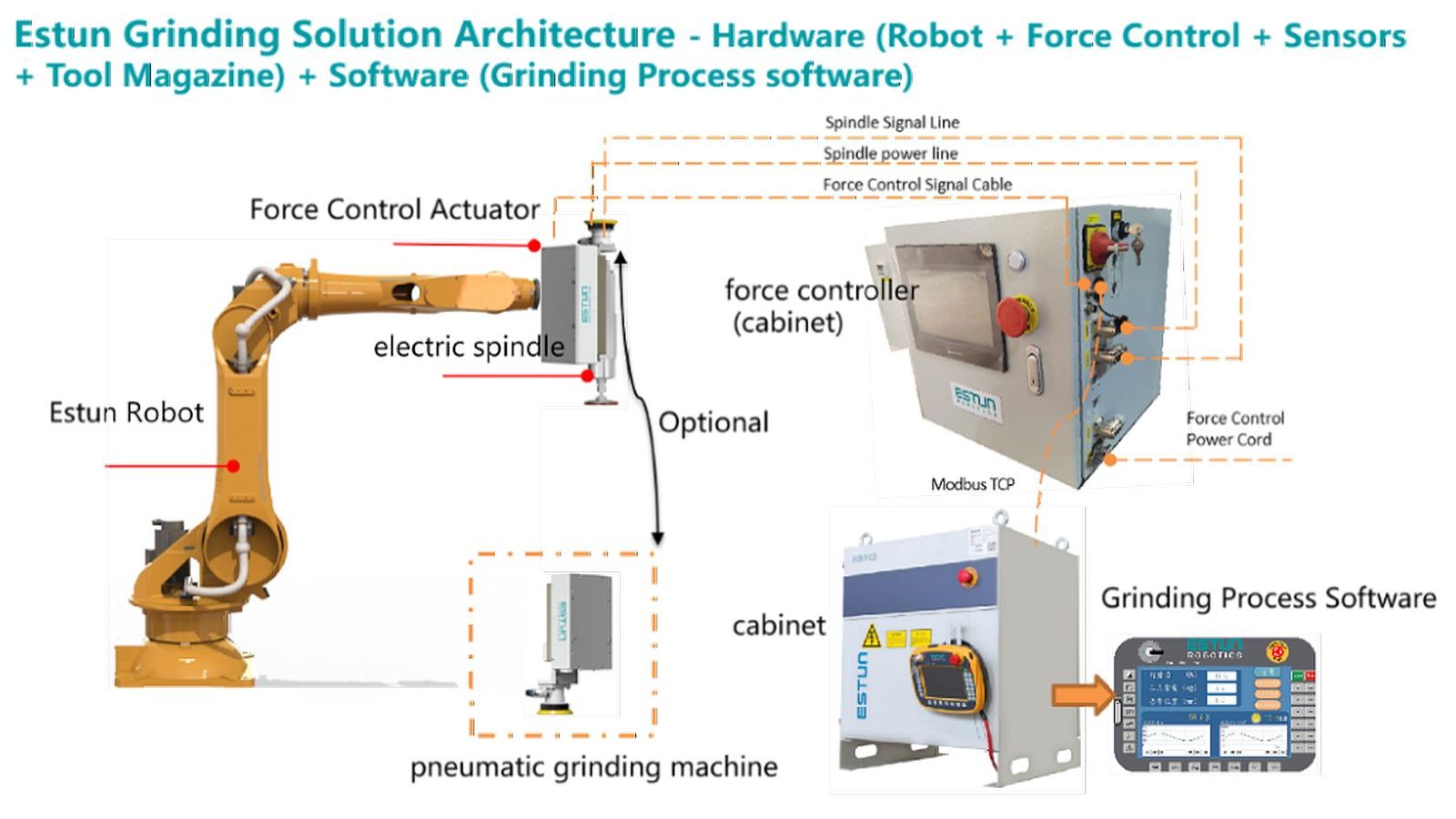
Estun Grinding Solution Architecture © Estun
Traditional manual grinding has several disadvantages, including high labor costs, low efficiency, inconsistent quality, and significant environmental and occupational health risks. At the same time, increasing industry competition requires companies to improve product quality, enhance production efficiency, and create better working environments. As a result, the demand for automated grinding solutions is becoming increasingly urgent.
Advances in robotics technology have greatly improved robot precision, speed, and flexibility. Robots can now meet the high-precision grinding requirements of energy storage products. They help increase production efficiency and product quality while reducing costs and environmental impact. The adoption of robotic grinding is therefore an important step toward intelligent and green manufacturing in the energy storage industry.
A leading global high-tech company, with business covering automotive, battery, electronics and new energy, and energy storage products widely used in household, industrial and grid-level energy storage projects, is a key player in the global energy storage market. However, the company's traditional hand polishing process gradually revealed some core problems:
- Efficiency issue: a single shift can only handle 40 pieces of battery trays/doors, labor costs accounted for up to 35%, and the difficulty of recruiting continues to increase.
- Quality risk: manual operation leads to uneven grinding of welded joints, and the defective rate of products is as high as 15%, which directly affects the safety and reliability of the energy storage system.
- Compliance pressure: The risk of occupational diseases caused by grinding dust makes it difficult to meet the global market's stringent requirements for environmental protection and workplace safety.
After receiving the customer's requirements, Estun quickly defined responsibilities and established a clear project execution plan. Process engineers analyzed the customer's grinding and polishing operations and identified key project risks. These included deformation of large frame products after welding, positioning errors during grinding, and overcutting during panel polishing.
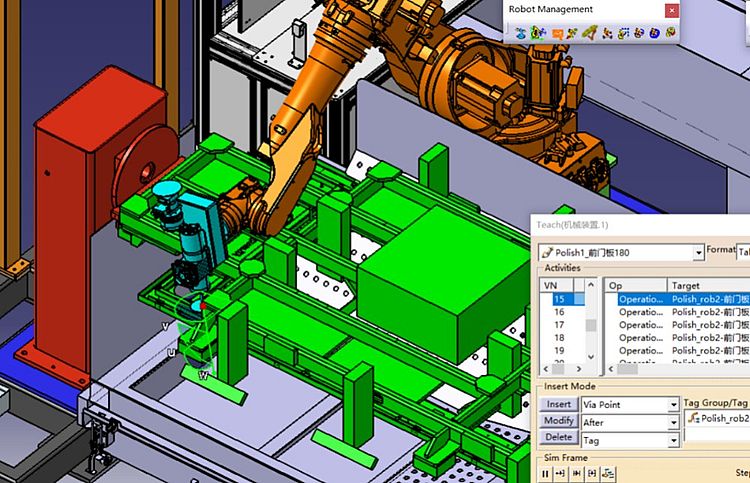
Estun then developed the solution and validated more than 40 process formulas. Robot simulation engineers simulated the grinding paths to determine the optimal solution while balancing process performance and equipment investment costs.
To address customer challenges, Estun introduced an integrated grinding solution for the energy storage industry. The solution is designed for battery trays, door panels, frames, assemblies, and other components. It supports both laser welding and arc welding applications. The grinding tasks include the removal of weld marks, weld joints, and weld seams.
The solution combines high-precision robots, adaptive force-control grinding tools, 3D laser line scanning, and an integrated intelligent control system. Force sensing and vision guidance enable the robot to perform automated grinding with high efficiency, high quality, and high precision.
The core benefits of Estun grinding solution:
High efficiency
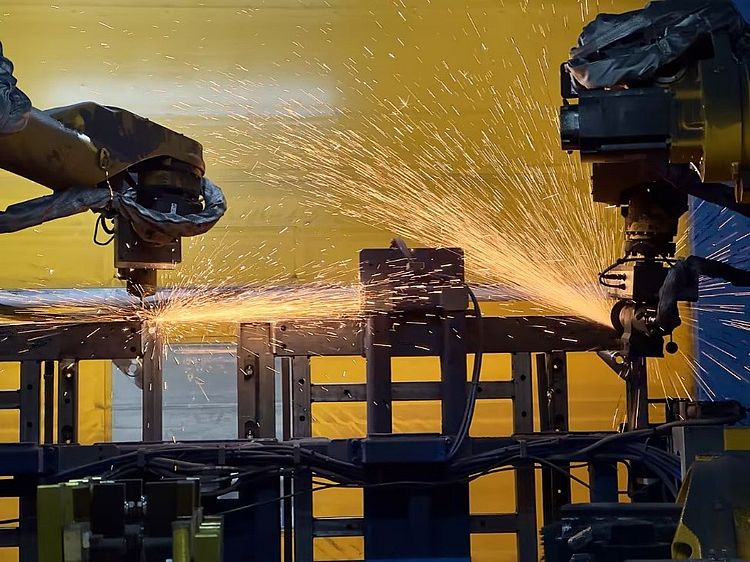
- High-speed grinding: dedicated grinding robot, high rigidity, high precision, fast robot running speed, significantly improving productivity.
- Multi-tasking Parallelism: Dual machines and dual stations support multi-robot cooperative work, grinding multiple workpieces at the same time.
High quality
- Consistent grinding results: Laser line scanning identifies product deformations and distortions, and tracks the grinding position to ensure consistent robot grinding results and minimize grinding errors due to deformations and positioning.
- High surface finish: Adaptive surface finishing with force-controlled grinding tools and precise control of the grinding parameters.
Flexibility
- Multi-product adaptation: the grinding program can be quickly adjusted to adapt to different specifications and materials of energy storage products.
- Quick changeover: support small batch and multi-species production needs.
Intelligent
- Data Management: Record the grinding data of each workpiece for quality traceability and analysis.
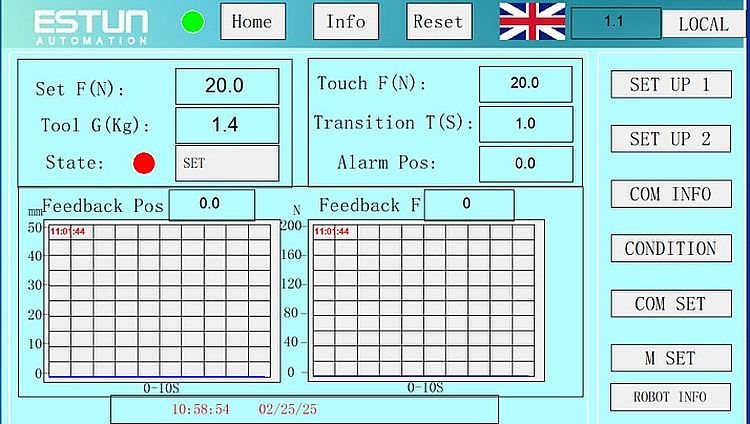
Estun's integrated grinding solution combines robots, force control technology, and laser line scanning. The system monitors grinding force and position in real time to ensure consistent grinding quality. It reduces product defects by more than 30% and significantly improves the grinding efficiency of energy storage cabinets.
Production capacity has increased from 40 units to more than 100 units per shift. The solution also reduces dependence on manual labor and lowers labor costs. In a single shift, the required workforce can be reduced by up to 30 operators. Estun's grinding solution has been successfully deployed at many leading energy storage companies in China, helping customers improve productivity and achieve substantial operational benefits.
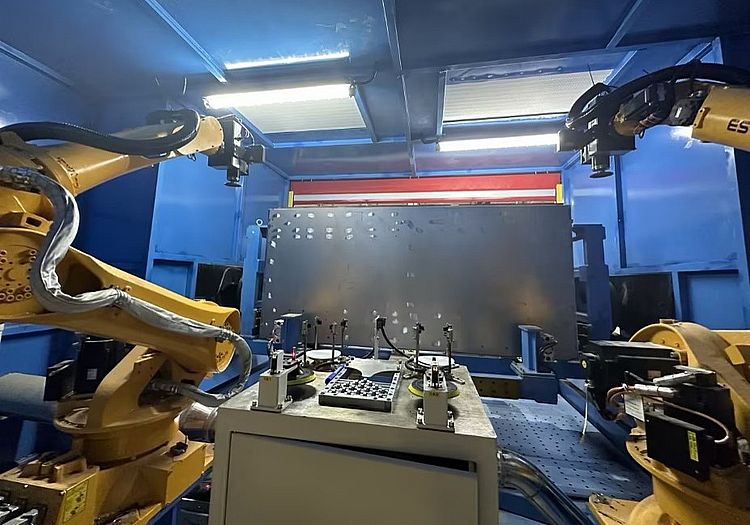
The value of robotic grinding goes beyond productivity and quality improvements. It also supports cost reduction, data-driven decision-making, flexible manufacturing, enhanced workplace safety, Industrial Internet integration, and green manufacturing. Through the integration of digital technologies, robotic grinding has become a key enabler of intelligent manufacturing.
Estun's grinding solution for the energy storage industry combines high-precision robots, an intelligent process control system, a laser line scanning system, and environmentally friendly design. The solution delivers efficient, high-quality, and flexible automated grinding services. It supports the energy storage industry's transition to intelligent manufacturing and sustainable growth. The solution can be widely replicated for frame-type and door-type products, helping the global energy storage industry advance toward intelligent manufacturing and carbon-neutral production.

