
The Technical Translator
If I had to describe what I do in simple terms, I would say that I build bridges. As Chief Marketing Officer in a global B2B industrial environment, I have consciously chosen to position myself as a translator who turns market dynamics into technological direction and technological capabilities into strategic value for customers.
My role has never been purely technical, having worked between engineering teams and executive boards throughout my career. I’m not the engineer who designs robot arms or writes its control algorithms. What I do is ensure that technological capabilities are aligned with real industrial priorities. This requires me to interpret market signals and translate them into strategic direction. I also help make advanced technology meaningful to customers who are navigating their own transformation journeys.
I realize that in highly technical environments, this role can sometimes appear secondary to engineering specialization. However, in our increasingly volatile industrial landscape, the ability to connect markets and technology is essential. Technology creates value when it answers a clear need and fits into a broader industrial vision. Helping make this alignment a reality has been a common thread that defines my professional identity.
Life Lessons
My relationship with technology began long before my career did. My grandfather was born in 1919 and lived through war and captivity. During those difficult years, he learned English and taught himself about aircraft engines because he believed that knowledge was freedom. When I was very young, he would tell me stories about airplanes and space exploration. I can still hear his voice repeating the same advice, if you study mathematics, technology and English, nothing will stop you. At the time, I couldn’t grasp the full weight of those words. Today, however, I understand the practical wisdom in using education as a road toward independence.
Discovering Technology
A few years later, when I was eight, I received my first computer. It came with a BASIC programming manual, and I could hardly wait to see what would happen next. I remember the thrill of typing a sequence of commands and watching the screen respond. Like the red robot, it felt as if I had discovered a hidden mechanism behind reality – give instructions and something will move.
At the same time, I was deeply interested in literature and languages. I wanted to understand how different cultures think, how narratives influence societies, how ideas travel across borders. That dual interest stayed with me and to this day, I believe that science and culture complement one another.
Human-centric Automation
When I entered industrial automation, I did not approach robotics as a narrow technical discipline. I saw it as a broader shift in how industries function and how societies evolve. Robotics and artificial intelligence influence production systems, but they also affect how people work, learn and organize knowledge.
I believe that technology must be guided with awareness. Automation should strengthen human capability and encourage deeper understanding, not replace critical thinking or reduce intellectual breadth. Studying engineering should not exclude studying history. Working with algorithms should not diminish the importance of language or culture.
Leading this transformation responsibly requires more than technical competence. It requires perspective. The industrial transition ahead calls for leaders who can connect engineering with economics, strategy with operations and innovation with societal impact.
Alchemy and Experience
Looking back, serendipity has played a meaningful role in my path. I have always worked across industries with very different dynamics, ranging from more traditional sectors to complex global environments. Yet I repeatedly joined organizations during moments of significant change, when structural, cultural and strategic shifts were all happening at the same time.
My experience in heavy industry and oil and gas has been particularly important. These sectors operate on a large scale and demand operational discipline and long-term planning. This chapter of my career strengthened my belief that automation and digitalization are cross-industry enablers and not confined to a single market.
What I learned is that while robotics sets the stage for broader industrial transformation, transformation itself depends largely on mindset. In other words, technology is essential, but the real challenge lies in bridging legacy systems with future models and aligning strategic intent with execution.
I Chose Comau Twice
I chose Comau twice in my career.
The first time, I was driven by curiosity. As a young girl, my father used to drive me past the company’s headquarters on the way to school. I would look at the buildings and wonder what was happening inside. There was, and still is, a red industrial robot in front of the factory and I was mesmerized when watching it move. Looking back, it represented precision, engineering discipline and global ambition. Years later, stepping inside Comau as a young engineer felt like entering a world I had long imagined.
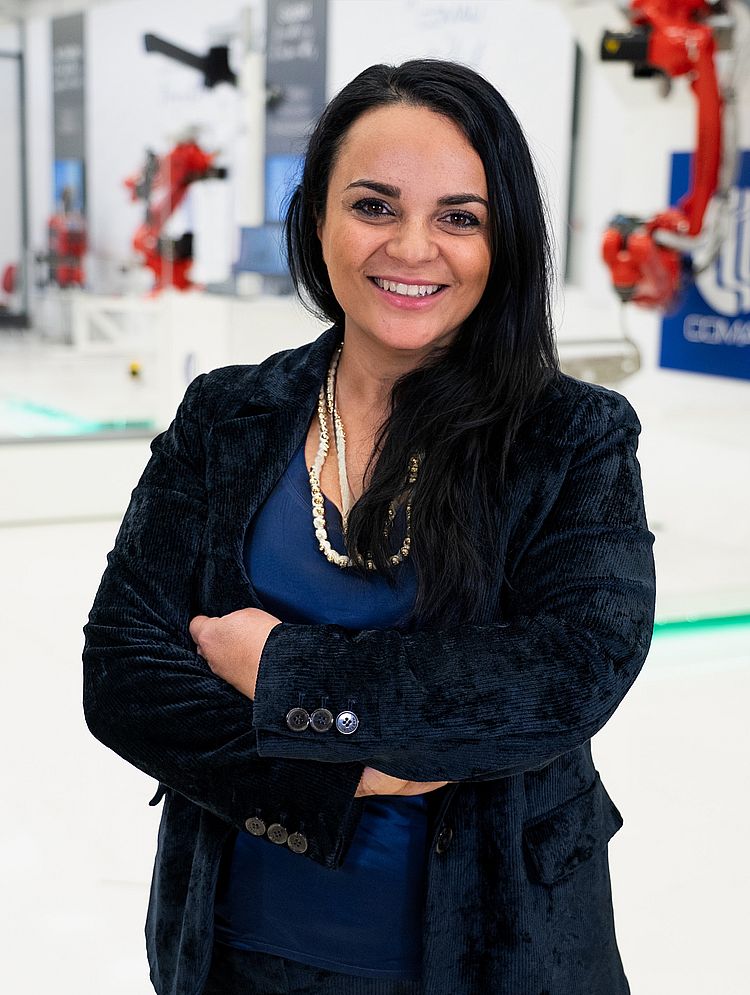
The second time, I returned as an executive, fully conscious of the responsibility my role implied. Comau carries decades of engineering depth and system integration expertise. Its heritage is rooted in a strong Italian industrial culture that combines mechanical excellence with design thinking and international reach.
My responsibility as part of the leadership team has been to safeguard that heritage while preparing the company for the next stage of global automation. This has meant reinforcing diversification, supporting industrial resilience and strengthening competitiveness in a changing landscape.
Transforming a company with such a legacy requires balance. We must preserve its rigor while encouraging agility, expanding into new sectors while maintaining identity. And nurture a culture that builds on the past while focusing on the future.
What This Award Means to Me
Being recognized among the Top 11 Women in Automation carries meaning that extends beyond personal recognition.
Across Europe, women account for a significant share of STEM graduates, yet their presence in advanced technology and industrial roles remains limited. In Italy, despite a strong manufacturing tradition, female participation in the high-tech industry is still below the European average.
I believe this abyss reflects a deep structural challenge. Industrial transformation requires leveraging the full range of available talent regardless of gender or identity. As a leader in a global advanced automation company with deep Italian roots, I feel a personal responsibility to contribute to widening access and visibility in this field.
Thoughtful Progress
Today, the lesson my grandfather shared about knowledge as freedom feels more relevant than ever. I am the mother of twin daughters who move comfortably between science and creativity. They don’t see boundaries between disciplines, but imagine futures shaped by both technical competence and human sensitivity.
For me, that freedom to envision different paths without imposed limits represents true progress. My grandfather believed that mathematics, technology and English could open any door, and I was encouraged to explore technology and to approach it with confidence.
I remain convinced that the future of automation will demand leaders who combine technical strength with cultural awareness and strategic responsibility. Robotics will continue to advance. The real question becomes how carefully we guide that progress and how intentionally we place human development at its center.
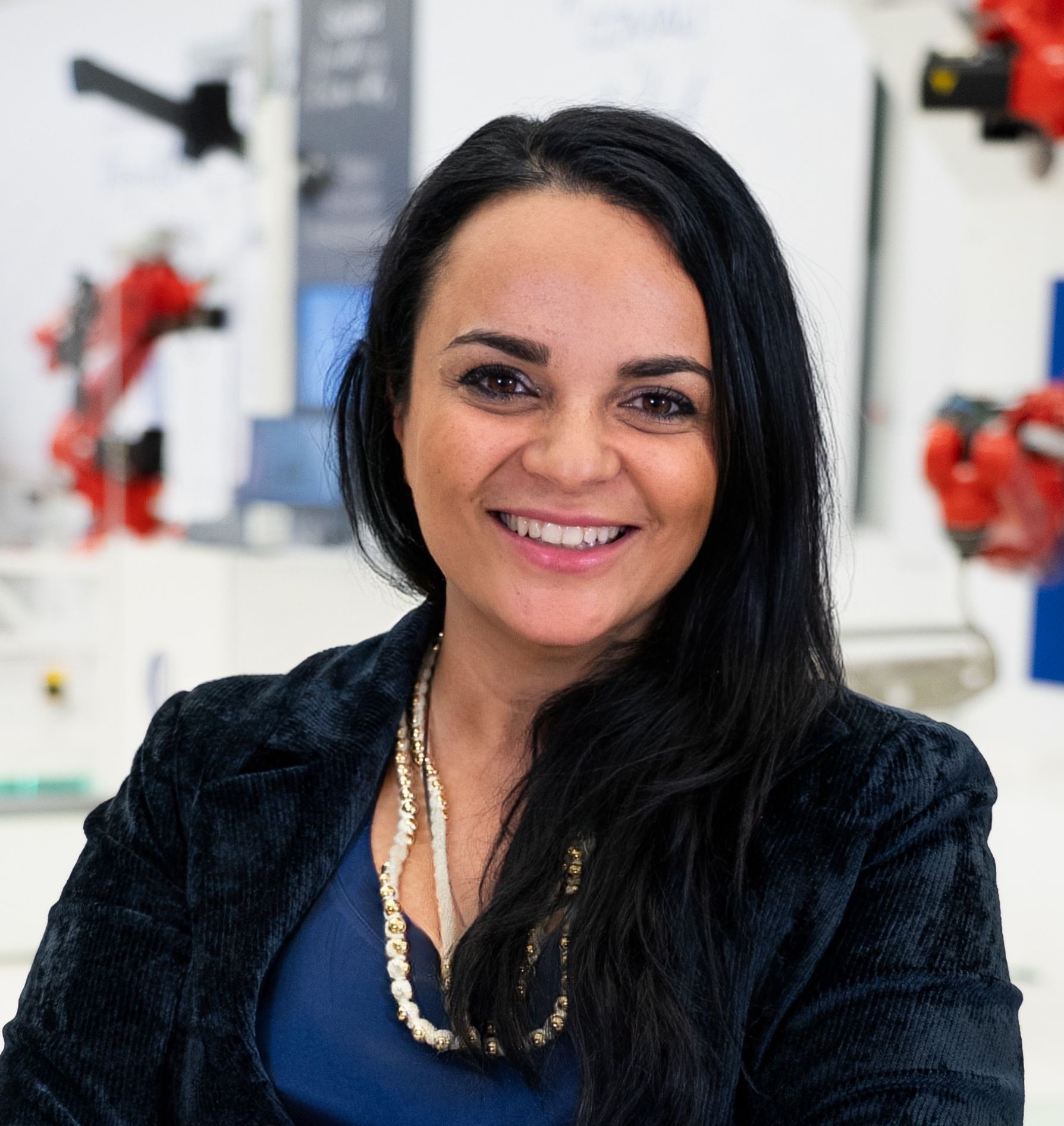
About the author
Stefania Ferrero
CMO
Comau, Italy
IFR Secretariat
The General Secretariat is responsible for the daily management of IFR and the coordination of all major activities, events and collaboration. The General Secretariat handles all questions regarding IFR membership.

Dr. Susanne Bieller
IFR General Secretary
Phone: +49 69-6603-1502
E-Mail: secretariat(at)ifr.org

Silke Lampe
Communication Manager
Phone: +49 69-6603-1697
E-Mail: secretariat(at)ifr.org
Credits · Legal Disclaimer · Privacy Policy ·World Robotics Terms of Usage · © IFR 2026